
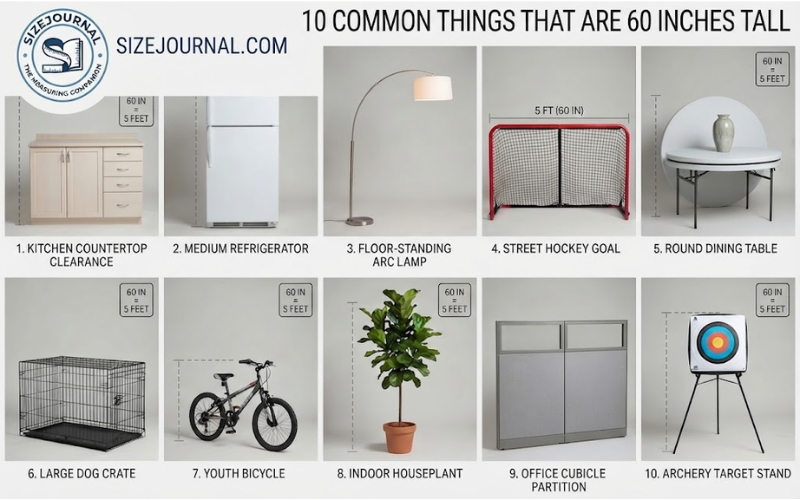
When people ask how tall is 60 inches, they are often trying to conceptualize a measurement that sits in a strange middle ground. Sixty inches translates to exactly 5 feet, or about 152.4 centimeters. Because it bridges the gap between everyday handheld items and larger structural architecture, visualizing a solid 5-foot height can sometimes be tricky.
Whether you are designing a room layout, buying furniture, or simply satisfying your curiosity, understanding scale is essential. Let us explore the physical reality of this measurement by looking at ten everyday objects that stand right at the 60-inch mark. 🌟
Understanding the Scale: Quick Reference ⏱️
Before jumping into the full list, it helps to anchor the number in your mind.
- Inches: 60 inches
- Feet: 5 feet exactly (5’0″)
- Metric: 152.4 centimeters (1.524 meters)
- Common Context: This height roughly matches the average height of an adult woman globally, or a twelve-year-old child.
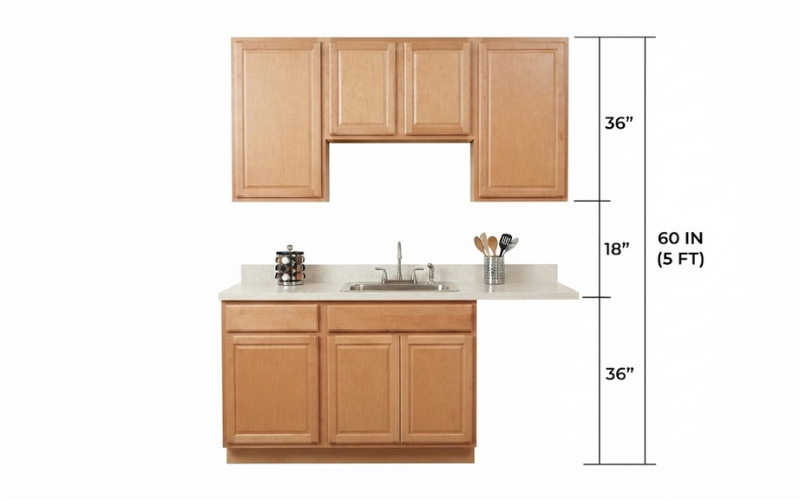
1. Standard Kitchen Countertop Height (With Upper Cabinet Clearance) 🍳
While standard kitchen counters sit at 36 inches, the space left between the countertop and the bottom of upper wall cabinets is frequently designed around standard modular increments. However, looking at vertical elements in cabinetry design, a standard pantry unit or a mid-height utility tower often hits a neat 60 inches tall. This allows cooks of various heights to reach items without needing a step stool for the lower shelves, while keeping the upper zones reserved for less frequently used kitchenware.
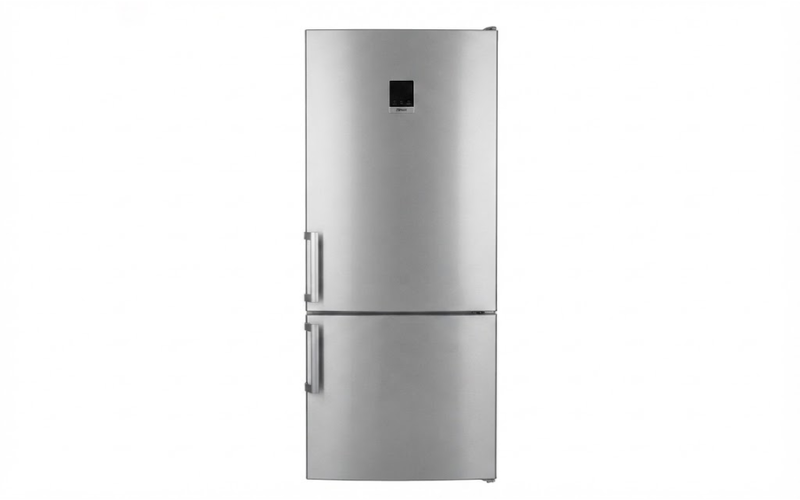
2. Medium-Sized Refrigerators (Compact to Standard Apartments) 🧊
Many apartment-sized or counter-depth refrigerators are manufactured to fit tighter spatial constraints. A typical mid-size fridge model measures right around 60 inches in height. This specific vertical dimension ensures the appliance holds a decent amount of food storage capacity—usually between 10 to 14 cubic feet—while still fitting comfortably underneath standard low-hanging kitchen soffits or overhead cabinetry.
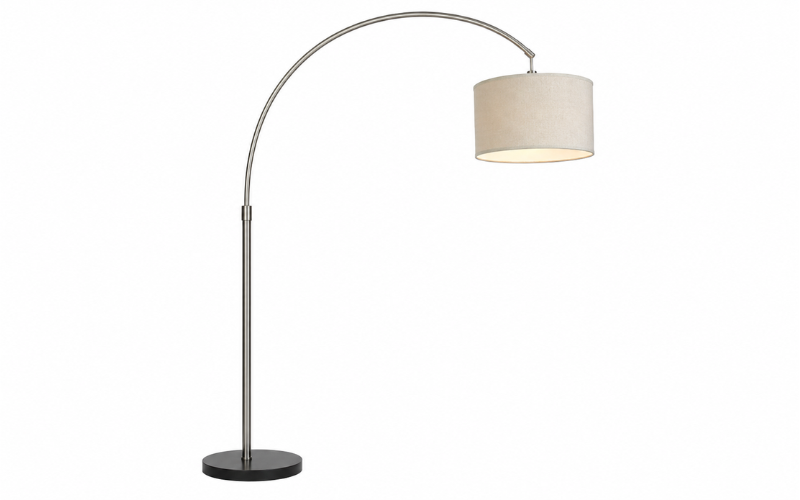
3. Floor-Standing Arc Lamps 🛋️
Interior lighting plays a massive role in room ambiance. Arc floor lamps, which curve gracefully over sofas and reading chairs, frequently have a total vertical pole height of 60 inches before the sweeping arm extends outward. Standing at this height, the vertical stem remains unobtrusive while positioning the light source at an ideal level to illuminate a room without shining directly into the eyes of someone sitting nearby.
4. Large Hockey Goals (Street and Training Nets) 🏒
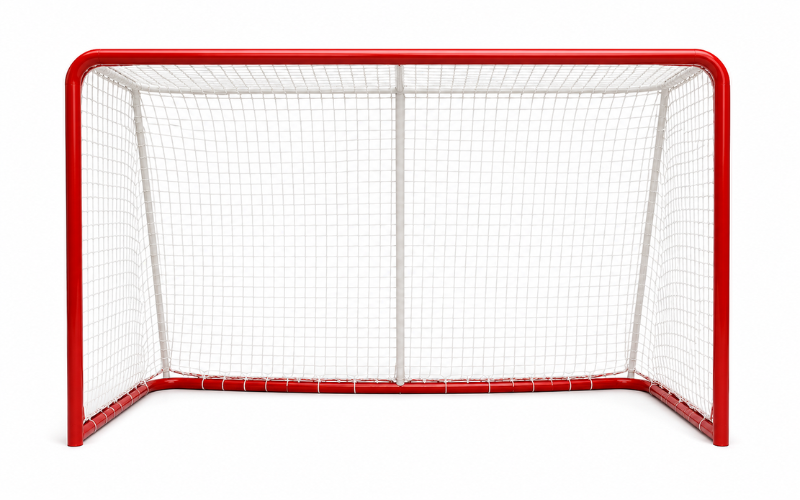
If you have ever walked past a driveway street hockey setup, you have likely encountered a net built to standard recreational dimensions. While regulation NHL goals are 4 feet (48 inches) high, many standard backyard and training street hockey nets are built larger, standing a full 60 inches (5 feet) tall by 72 inches wide. This extra vertical space accommodates developing players and makes target practice more realistic compared to smaller mini-nets.
5. Standard Round Dining and Event Tables (Stacked or Vertical Clearance) 🍽️
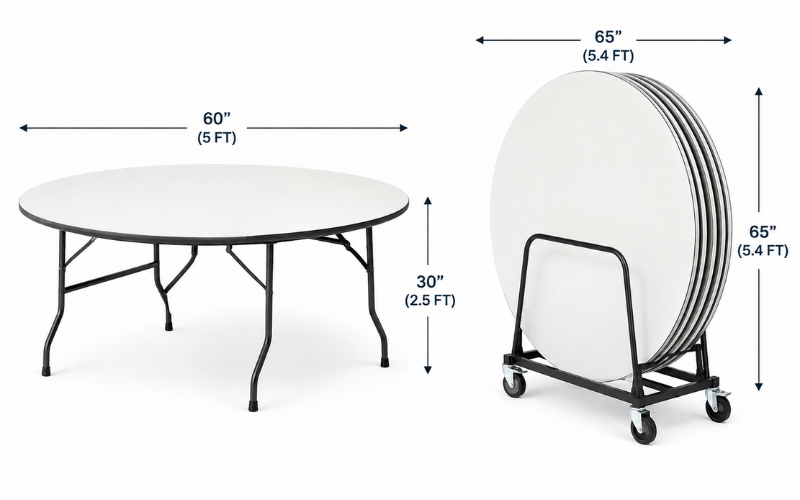
While the top of a dining table usually sits around 30 inches off the ground, specialized elements like vertical table storage racks, folding banquet table storage carts, or high-backed Throne chairs designed for events measure right around 60 inches tall. Furthermore, large round banquet tables often measure 60 inches in diameter, making them a fascinating geometric counterpart where width and vertical standards intersect in furniture logistics.
6. Large Dog Crates for Extra-Large Breeds 🐕
Pet owners housing large dog breeds like Golden Retrievers, German Shepherds, or Standard Poodles often rely on heavy-duty wire or plastic kennels. The largest standard indoor crates—or vertical exercise pen panels configured in a square—frequently stand 60 inches high when specialized vertical containment is required for high-jumping or active working dogs. This prevents animals from clearing the top boundary during training or temporary confinement.

7. Youth Bicycles and Small Adult Mountain Bikes 🚲
When looking at bike sizing charts, wheel dimensions and frame sizing tell part of the story, but overall rider fit is crucial. A bicycle positioned vertically from the ground to the top of raised handlebars on a small-frame adult mountain bike or cruiser often measures right around 60 inches in total vertical clearance. It serves as a helpful mental benchmark for storage space when fitting bikes into tight garage wall racks or vehicle trunk cargo areas.

8. Medium Indoor Houseplants (Fiddle Leaf Figs and Monsteras) 🪴
Urban jungles and indoor plant styling frequently feature statement greenery. A well-established Fiddle Leaf Fig (Ficus lyrata), Snake Plant cluster, or tall Monstera Deliciosa in a decorative ceramic pot often reaches a mature height of 60 inches. At 5 feet tall, these plants act as living indoor architectural pillars, filling empty corner spaces in living rooms and office foyers beautifully.

9. Office Partition Cubicle Walls 🖥️
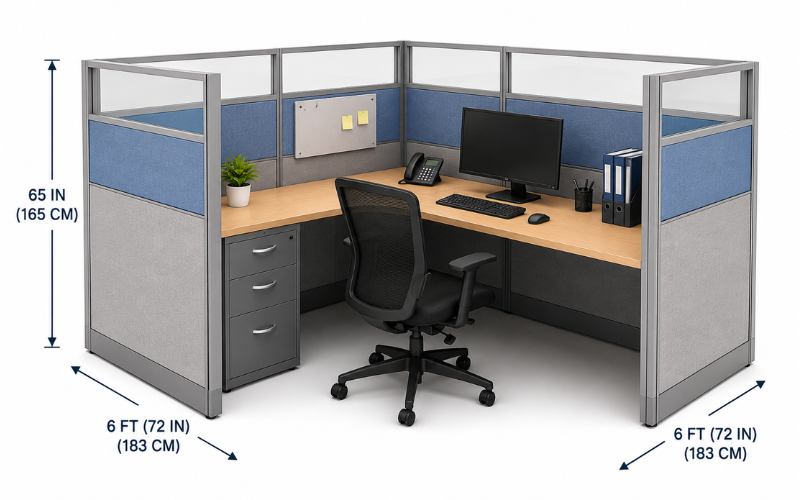
Open-plan corporate offices rely on modular panels to carve out private workspaces. Standard standing-height privacy cubicle walls are typically manufactured to be 60 inches tall. This specific height is carefully calculated: when an employee is sitting down at their desk, the 60-inch wall completely shields them from view, offering focus and privacy. However, when an employee stands up, their head clears the top of the panel, allowing them to easily converse with colleagues across the room.
10. Archery Target Stands (Standard Practice Setup) 🏹
Archery is a sport built heavily on precision measurements. Backyard and club archery target stands holding foam block targets or traditional straw bales are typically mounted so that the center of the target rests at a comfortable shoulder height, with the entire freestanding structural frame stretching roughly 60 inches tall from the grass surface up. This ensures both youth and adult archers can practice trajectory and form without straining upward or aiming uncomfortably downward.

Bio-Wiki Summary Table 📊
To keep these measurements crystal clear, review the quick structural breakdown below:
| Object Category | Item Description | Height in Inches | Height in Metric | Primary Use Case |
| Appliance | Compact Apartment Fridge | 60 in | 152.4 cm | Food preservation in tight spaces |
| Furniture | Arc Floor Lamp Stem | 60 in | 152.4 cm | Living room and reading illumination |
| Office | Cubicle Partition Wall | 60 in | 152.4 cm | Workspace privacy and sound dampening |
| Sports | Training Street Hockey Net | 60 in | 152.4 cm | Backyard sports and target practice |
| Nature | Mature Indoor Ficus Tree | 60 in | 152.4 cm | Interior home decor and landscaping |
| Pet Care | Extra-Large Animal Kennel | 60 in | 152.4 cm | Safe containment for active dogs |
Related Posts
- Mastering the Scale: How Long Is 50 Inches in Real Life?
- 10 Common Things That Are 40 Inches Long
- 10 Everyday Objects That Measure Exactly 3 Inches Long
Frequently Asked Questions (FAQs) 🤔
How many feet and inches is 60 inches?
60 inches is exactly 5 feet 0 inches. Because there are 12 inches in a single foot, dividing 60 by 12 gives you a clean number of 5 feet with zero remainder.
Is 60 inches considered tall for a human?
For an adult, 60 inches (5 feet) is slightly below the average height for men globally, and roughly around the average adult female height in several regions around the world. It is a very common height for teenagers and adolescents.
How do I convert 60 inches to centimeters?
To convert inches to centimeters, you multiply the value by 2.54. Therefore, 60 multiplied by 2.54 equals 152.4 centimeters (or 1.524 meters).
What screen size corresponds to a 60-inch measurement?
When shopping for a television or computer monitor, a “60-inch screen” refers to the diagonal measurement from one corner of the display to the opposite corner, rather than its straight vertical height. A standard 16:9 aspect ratio television with a 60-inch diagonal screen is actually about 29.4 inches tall and 52.3 inches wide.
Conclusion 🌟
Measuring out exactly 60 inches can be surprisingly useful, whether you are hanging an art piece, rearranging furniture, or building a backyard sports setup. By visualizing these ten everyday items—from office cubicle walls to mature indoor houseplants—translating abstract numbers into physical reality becomes much simpler. The next time you encounter a 5-foot measurement, you will instantly recognize the scale and know precisely how it fits into your living or working space.
FOR MORE MEASUREMENTS VISIT: SIZE JOURNAL