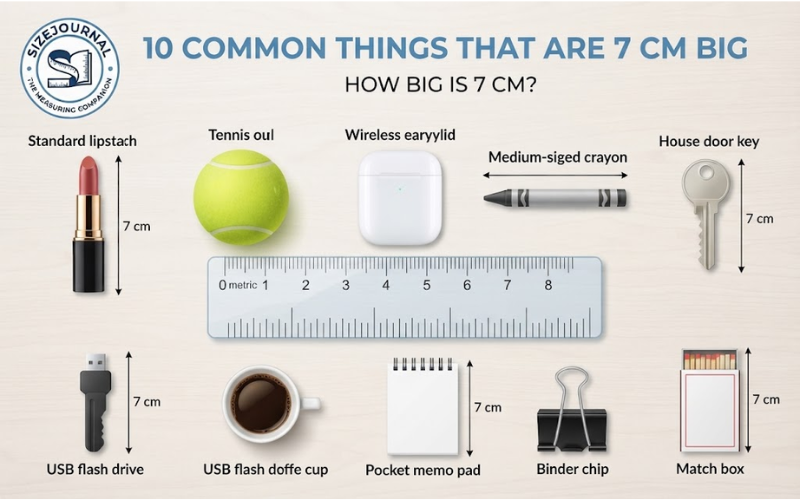
Visualizing measurements can feel abstract when you are staring at numbers on a page. When someone asks how big is 7 cm, they usually want a tangible frame of reference. Numbers like seven centimeters sound precise, but without an object in hand, it is difficult to judge whether something is large, small, or medium. Centimeters belong to the metric system, which is used globally for nearly all scientific, industrial, and daily measurements. Understanding a scale like 7 centimeters helps when you are shopping online, doing DIY crafts around the house, checking product specifications, or helping kids with school math homework. Throughout this guide, we will break down what 7 centimeters actually looks like, how it translates into other measurement systems, and ten common everyday items that match this exact size.
Quick Reference: Quick Facts About 7 CM
- Metric equivalent: 70 millimeters (mm)
- Imperial equivalent: Approximately 2.76 inches
- Visual profile: Roughly the length of a standard index finger joint or a small pocket item
- Common usage: Cosmetics, small electronics, stationery, household hardware
What Exactly is 7 CM in Inches and Millimeters?
To fully grasp how big is 7 cm, it helps to look at the mathematical breakdown across different units. The metric system makes conversions simple because everything is based on powers of ten. One centimeter equals ten millimeters, meaning 7 centimeters is precisely 70 millimeters. This level of precision is crucial in engineering, manufacturing, and tailoring, where a fraction of a millimeter changes how components fit together.
When converting to the imperial system, which is standard in the United States, 7 centimeters translates to roughly 2.76 inches, or a tiny hair under 2 and 3/4 inches. If you hold up a standard Western ruler, locate the zero mark, and move your eyes along the scale past the two-inch mark, you will pass the half-inch line (2.5 inches) and land just past it at 2.76 inches. That small gap between 2.75 inches and 2.76 inches is negligible for most casual tasks, but knowing the exact decimal helps when comparing imported product dimensions with domestic goods.
The Psychology of Size Perception and Ergonomics
Human beings rely heavily on comparative visual anchors to understand physical dimensions. Our brains do not naturally process raw millimeter or centimeter counts without context. When an object measures around 7 centimeters, it falls into a unique category of handheld convenience. Ergonomic studies in industrial design show that objects falling between 5 and 10 centimeters are ideal for finger manipulation, thumb activation, and precision grip. This is why tools, gadgets, and personal care items frequently gravitate toward this specific scale. When a product is designed to be gripped, twisted, or pressed repeatedly, a 7-centimeter profile minimizes hand fatigue and maximizes control.
10 Common Things That Are 7 CM Big
Let’s explore the actual objects you can find around your home, office, or pocket that measure right around 7 centimeters.
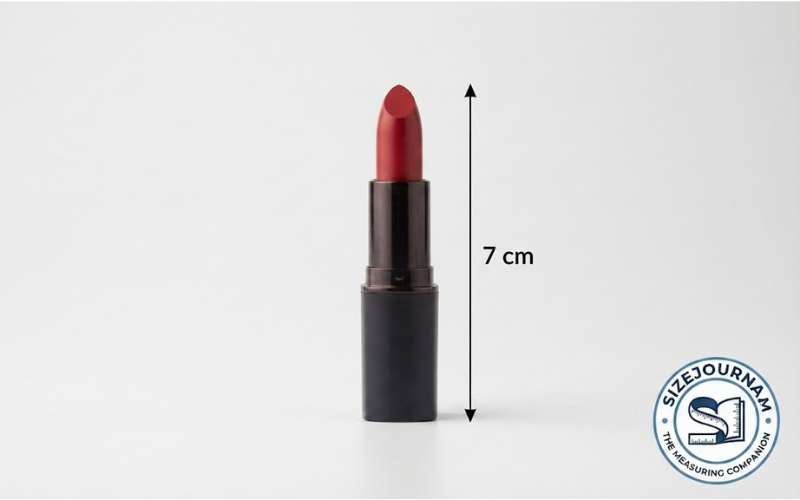
1. Standard Lipstick Tube Height 💄
Cosmetic packaging is heavily standardized for ergonomics, pocket storage, and manufacturing efficiency. Most standard bullet lipstick containers measure between 70 to 75 millimeters in height. When you twist open a tube of lipstick to apply it, the total vertical length of the casing—from the flat base resting on your vanity to the tip of the cap—typically sits right at 7 centimeters. This dimension was chosen decades ago because it fits comfortably inside the palm of an average human hand, allows for stable application, and slips easily into a small handbag, pocket, or makeup pouch without taking up unnecessary space. If you want a quick mental shortcut to visualize 7 cm, holding a standard lipstick tube gives you an exact physical model.
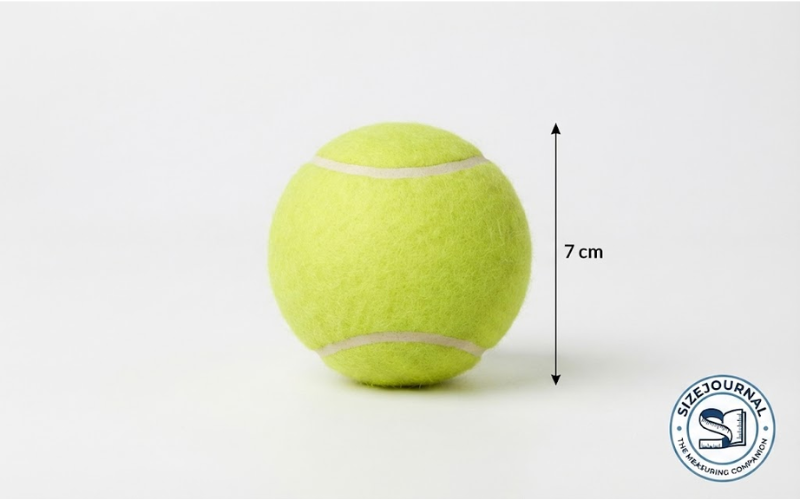
2. Tennis Ball Diameter 🎾
While sports equipment is frequently measured in inches or specialized units, tennis balls conform to strict international regulations. According to governing athletic bodies, a regulation tennis ball must have a diameter ranging between 6.54 and 6.86 centimeters. This places the average tennis ball right at the doorstep of 7 centimeters. When you hold a tennis ball in your hand, the distance straight across its widest point matches this metric value. The size is engineered specifically to balance aerodynamics, bounce height, and ease of grip for players holding a racket. Next time you watch a match or toss a tennis ball around, you are interacting directly with an object governed by a sub-seven-centimeter scale.
3. Wireless Earbud Charging Case Width 🎧
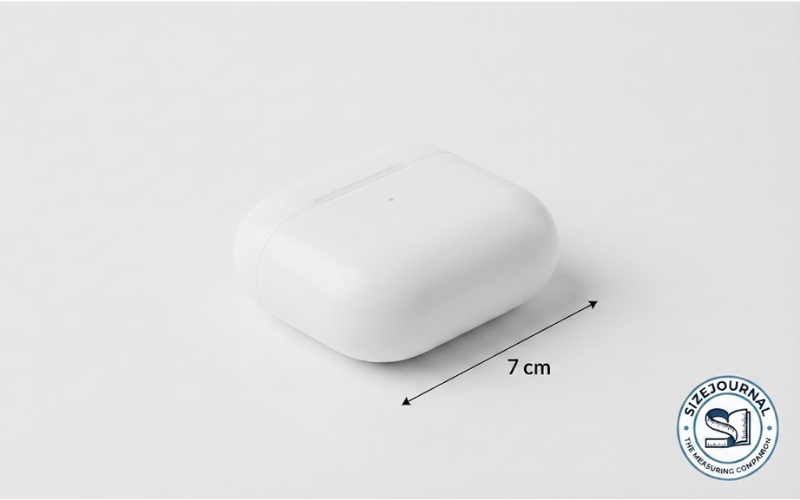
Portable audio has shifted entirely toward wireless earbuds, and their charging cases are designed for maximum pocketability. Many popular wireless earbud models feature rectangular or oval charging cases whose horizontal width measures approximately 7 centimeters. For instance, compact earbud cases slide effortlessly into jeans pockets or small backpack compartments because their width is restricted to this specific ergonomic range. When manufacturers design these accessories, they must balance battery capacity with pocket comfort, and a 7-centimeter width hits the sweet spot for housing internal batteries while remaining ergonomic.
4. Medium-Sized Crayon Length 🖍️
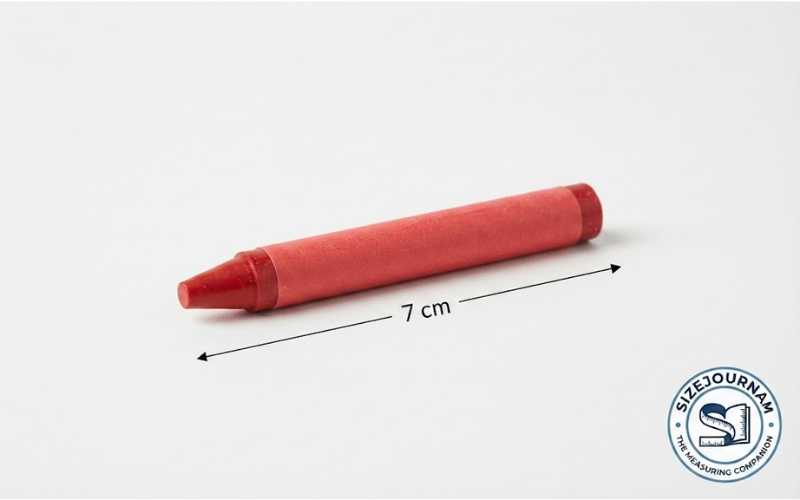
Children’s art supplies provide excellent educational benchmarks for learning measurements. A standard, brand-new wax crayon straight out of the box is often engineered to be around 7 centimeters long. While jumbo crayons are larger and heavily used crayons shrink down through wear and tear, a standard school crayon represents a classic 7-centimeter object. Teachers frequently use brand-new crayons in classrooms to introduce young students to rulers, helping them see how numbers translate into physical objects. If you have children or keep a box of art supplies in a drawer, pulling out a fresh crayon offers an instant tactile reference for this specific length.
5. Standard House Door Key Length 🔑
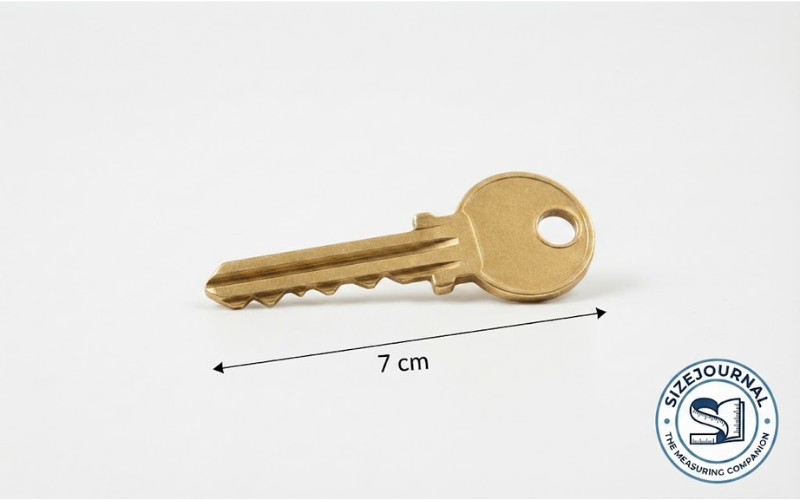
Security hardware requires reliable dimensions that fit comfortably into pockets, keychains, and locks. A standard house door key, measured from the flat head (the bow) where you grip it to the sharp tip at the end, typically measures between 6 and 7 centimeters long. This length provides enough leverage to turn heavy deadbolts or spring latches without requiring excessive torque, while still being short enough not to poke painfully through your pocket lining. Automobile keys and specialized smart fobs vary widely, but a traditional brass house key serves as an everyday anchor for the 7-centimeter measurement.
6. Small Pocket-Sized USB Flash Drive 💾
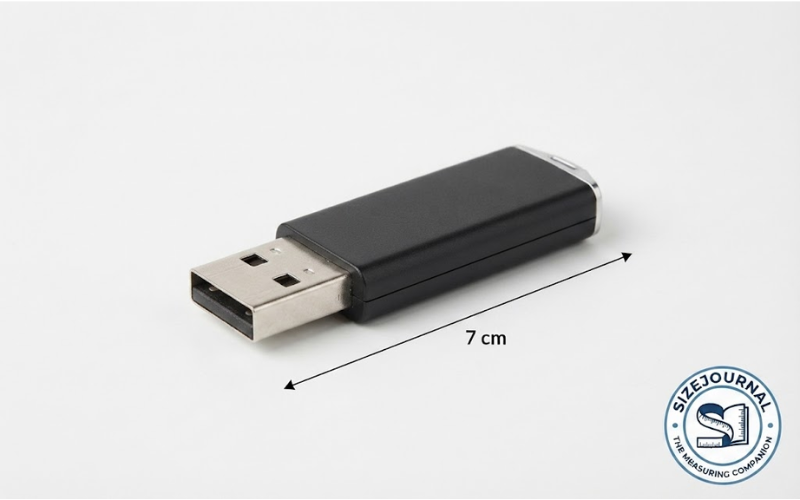
Even though cloud storage has dominated data transfer, physical USB flash drives remain common tools for quick file sharing. A standard rectangular plastic or metal thumb drive usually measures around 6.5 to 7 centimeters in length. This size allows enough room for the internal circuit board, the USB-A or USB-C connector interface, and an outer shell robust enough to withstand being dropped or tossed into a bag. When you plug a flash drive into a laptop port, the portion extending outward gives you a clear visual confirmation of what 7 centimeters looks like in modern electronics.
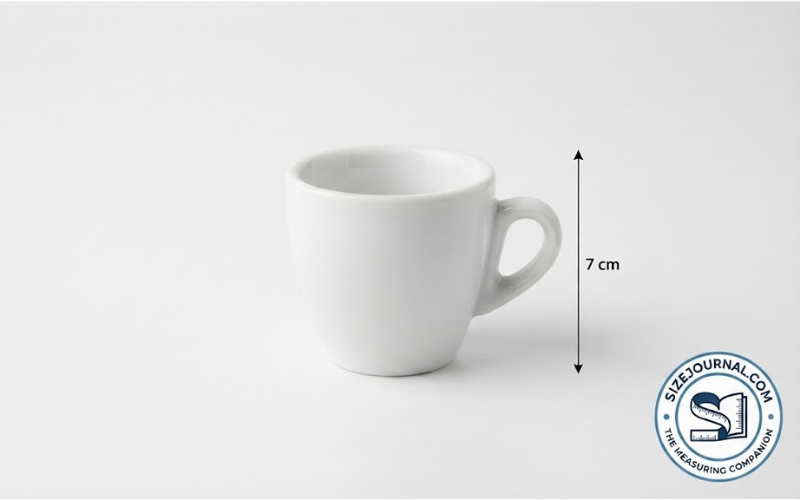
7. Espresso Coffee Cup Height ☕
Morning routines often involve specialized kitchenware, and espresso culture relies on precise dimensions to maintain temperature and crema quality. A standard European-style espresso cup or small shot glass designed for coffee extraction stands roughly 7 centimeters tall. This height ensures the cup fits comfortably underneath the group head of commercial or home espresso machines, leaving just enough clearance for liquid to pour directly into the vessel without splashing. If you enjoy an afternoon shot of espresso, the cup sitting on your saucer provides a reliable, everyday visual anchor for 7 centimeters of height.
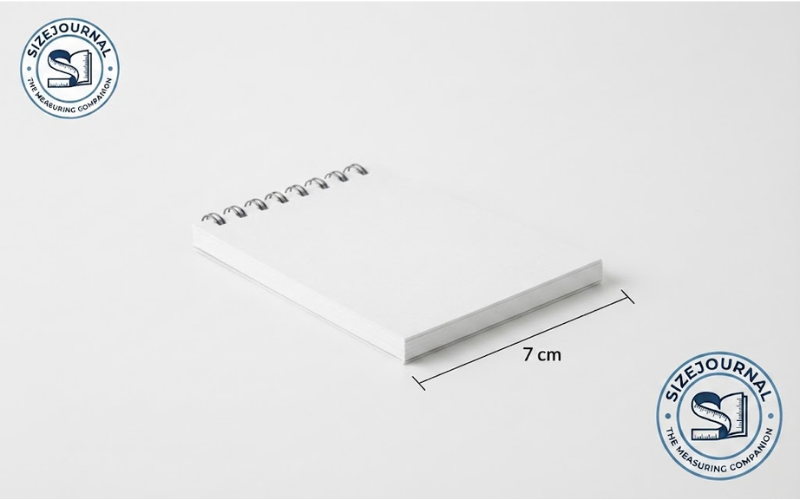
8. Small Pocket Memo Pad Width 📓
Note-taking on the go often requires compact stationery. Small pocket notebooks, reporters’ pads, and tear-off memo blocks frequently feature a width of around 7 centimeters. This narrow width makes the notebook easy to grip with one hand while writing with the other, fitting neatly into shirt pockets or suit jackets. Stationery manufacturers design these dimensions based on human ergonomics, ensuring that writing lines are long enough to form legible words while keeping the overall footprint small enough for true portability.
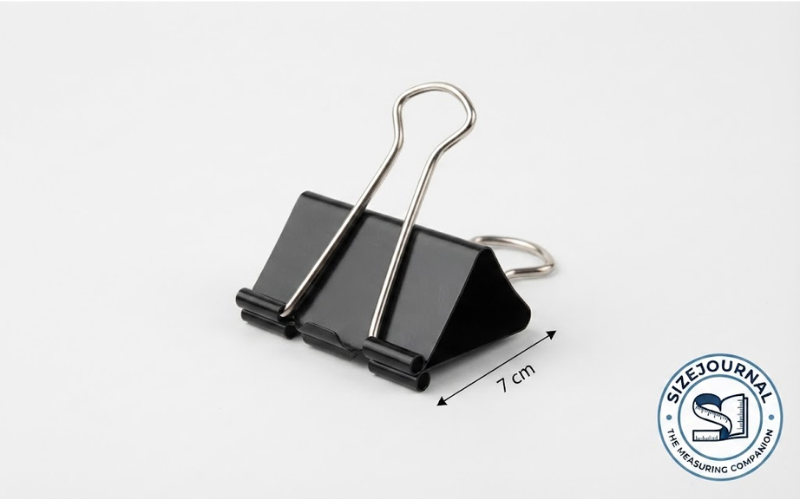
9. Standard Binder Clip Body Scale 📎
Office supplies are treasure troves of precise metric measurements. Medium-sized office binder clips feature a steel wire body whose diagonal or width spans right around 7 centimeters when measured across the outer edges or when the wire handles are folded out. While the black metal base of a medium binder clip is usually around 25 to 32 millimeters wide, its overall operational footprint and structural geometry engage the 7-centimeter scale when handling thick stacks of paper or when the handles are fully extended for opening.
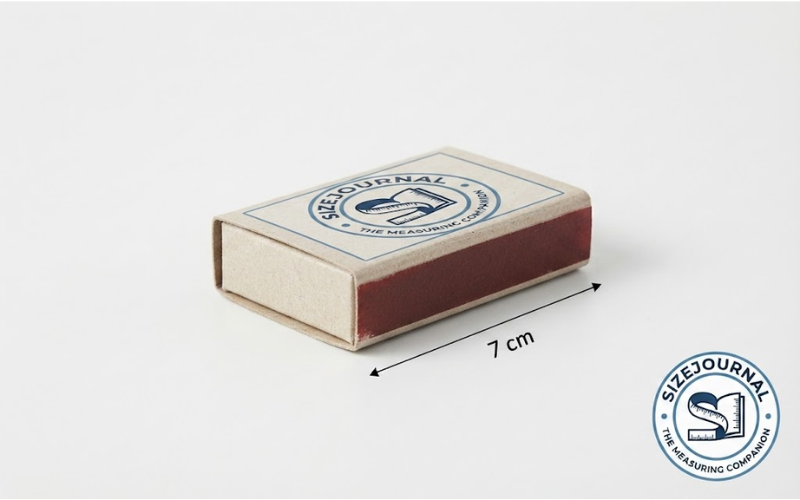
10. Small Matchbox Length or Box Width 📦
Household utility items like safety matchboxes have maintained standardized dimensions for generations. While some matchboxes are larger, standard small matchboxes or match container widths often approximate 6 to 7 centimeters in length. The sliding outer sleeve and inner tray are sized so that they can be easily held between a thumb and forefinger, struck against the side strip, and stored safely in kitchen drawers or emergency kits.
Biowiki Data Table for 7 Centimeter Objects
| Object Name | Category | Exact Dimension (cm) | Imperial Equivalent | Common Use Case |
| Lipstick Tube | Cosmetics | 7.0 – 7.5 cm | ~2.76 – 2.95 in | Lip makeup application |
| Tennis Ball | Sports | 6.54 – 6.86 cm | ~2.57 – 2.70 in | Tennis matches & sports |
| Earbud Case Width | Electronics | ~7.0 cm | ~2.76 in | Storing wireless earbuds |
| Crayon Length | Stationery | ~7.0 cm | ~2.76 in | Drawing and coloring |
| House Door Key | Hardware | 6.0 – 7.0 cm | ~2.36 – 2.76 in | Unlocking doors |
| USB Flash Drive | Electronics | 6.5 – 7.0 cm | ~2.56 – 2.76 in | Portable data storage |
| Espresso Cup Height | Kitchenware | ~7.0 cm | ~2.76 in | Serving espresso shots |
| Pocket Memo Pad Width | Stationery | ~7.0 cm | ~2.76 in | Quick note-taking |
| Binder Clip Scale | Office Supplies | ~7.0 cm (span) | ~2.76 in | Securing paper stacks |
| Matchbox Scale | Household | 5.8 – 7.0 cm | ~2.28 – 2.76 in | Storing matches |
Practical Ways to Measure 7 CM Without a Ruler
If you find yourself without a ruler, tape measure, or digital tool, estimating 7 centimeters is surprisingly easy using your own body or common household references. Human anatomy offers built-in scales that remain relatively consistent across adults. For instance, the distance from the tip of your index finger to the first knuckle is often very close to 2.5 centimeters, meaning the first two joints combined frequently approximate 5 to 7 centimeters depending on hand size. Alternatively, the width of two adult fingers (index and middle finger pressed together) combined with a thumb base can give you a quick baseline estimate.
Another reliable method is using currency or standard cards. While a credit card is roughly 8.5 cm long, its short side is 5.4 cm. Adding a tiny bit more than half an inch to that short side gives you an accurate mental image of 7 centimeters. Mastering these quick mental and physical checks ensures you never feel stranded when trying to visualize dimensions on the go.
Related Posts
- 10 Common Things That Are 6 cm Big
- 10 Everyday Objects That Are 5 cm Big
- 10 Common Things That Are 3 cm Big
- 10 Common Things That Are 2 cm Big
- 10 Common Things That Are 1 cm Big
Frequently Asked Questions About 7 Centimeters
How many inches is 7 cm?
7 centimeters is equal to 2.76 inches. When working with fractions, it is very close to 2 and 3/4 inches (which is 2.75 inches). For most everyday estimations, rounding it to 2.75 inches is completely acceptable.
Is 7 cm considered large or small?
In the context of everyday objects, 7 centimeters is a medium-to-small measurement. It is compact enough to fit comfortably in the palm of a hand or a pocket, yet large enough to be easily handled and noticed without magnification.
How do I convert centimeters to millimeters?
To convert centimeters to millimeters, multiply the centimeter value by 10. Therefore, 7 centimeters multiplied by 10 equals 70 millimeters.
Can I use a smartphone screen to measure 7 cm?
Yes, many digital screen measurement tools and calibration interfaces display accurate rulers on smartphone screens. However, you must ensure the application is calibrated correctly to your specific screen resolution and pixel density so that 7 centimeters on the screen matches actual physical dimensions.
Why is the metric system used for measuring small objects?
The metric system is based on units of ten, making calculations, scaling, and conversions between millimeters, centimeters, and meters seamless and universally understood across international borders.
Final Thoughts on Visualizing 7 Centimeters
Getting a firm grasp on measurements like how big is 7 cm bridges the gap between abstract numbers and physical reality. Whether you are eyeing a product online, working on a meticulous DIY project, or simply satisfying your curiosity, having reliable mental benchmarks changes how you interact with the physical world. From the familiar height of a standard lipstick tube and the comfortable grip of an espresso cup to the precise dimensions of a tennis ball and house keys, seven centimeters quietly governs many of the handheld items we rely on daily. By keeping these everyday objects in mind, you can effortlessly visualize this metric scale anytime, anywhere, without needing to hunt down a ruler.
FOR MORE MEASUREMENTS VISIT: SIZE JOURNAL