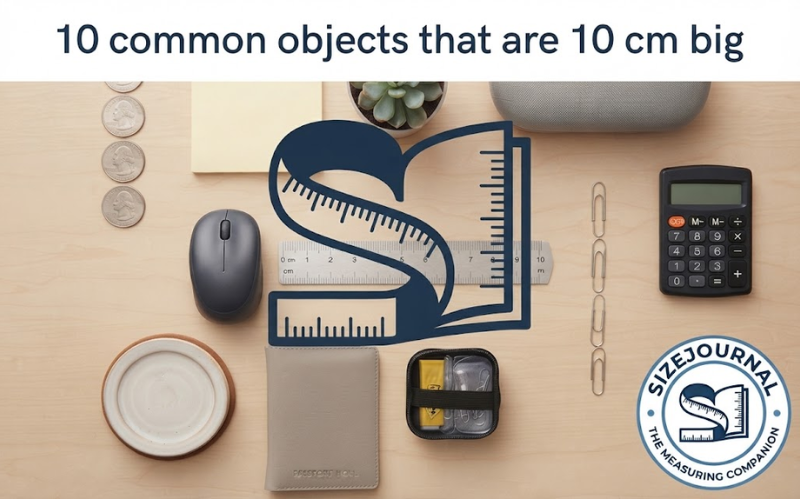
Understanding measurements can sometimes feel abstract when you are only looking at numbers on a plastic ruler. When people ask how big is 10 cm, they often want a tangible real-world comparison that instantly clicks in their mind. Ten centimeters sits in that sweet spot of everyday scale—large enough to see clearly without squinting, yet small enough to fit comfortably inside a pocket, palm, or backpack. In metric terms, 10 centimeters equals 100 millimeters or exactly one-tenth of a meter. Converting that to imperial units, it is roughly 3.94 inches, making it a tiny fraction shy of four full inches.
Visualizing this specific scale becomes much easier when you examine everyday items that populate homes, offices, and pockets. Recognizing these standard objects eliminates the guesswork when shopping online, working on craft projects, or teaching children about units of length.
Quick Overview: Understanding How Big Is 10 Centimeters
Before examining specific items, establishing a few quick conversion benchmarks helps ground the concept of how big is 10 cm in standard measurement units 📏.
- Metric Equivalent: 100 millimeters (mm) or 0.1 meters (m) 📐
- Imperial Equivalent: Approximately 3.94 inches (in) or 0.33 feet (ft) 📐
- Visual Scale: Roughly the width of an adult hand palm or a standard smartphone width.
- Common Use Cases: Pocket electronics, desk accessories, stationery items, and small kitchen tools.
1. Four US Quarters Lined Side-by-Side 🪙
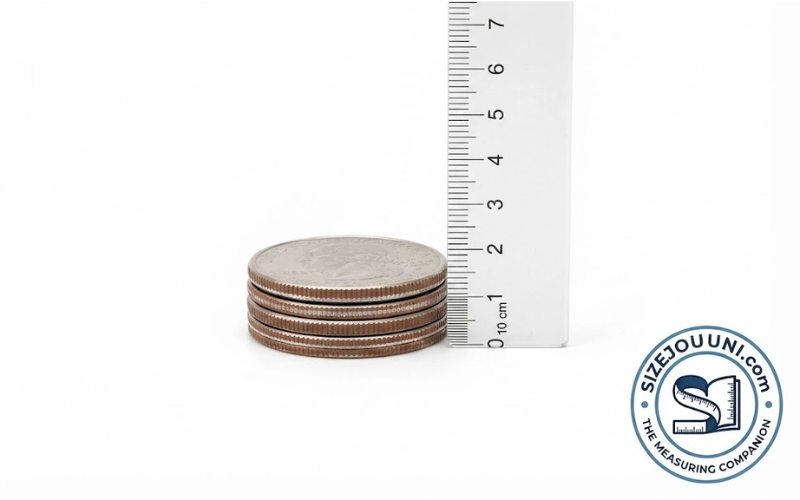
Coins offer some of the most reliable standardized measurements available because national mints produce them under strict uniformity regulations. A standard United States quarter has a diameter of precisely 24.26 millimeters, which translates to roughly 2.43 centimeters.
When you align four of these coins in a straight row right next to each other, the total combined length reaches approximately 9.7 centimeters. This gets remarkably close to the 10-centimeter mark, missing it by less than the thickness of a fingernail. People frequently use this coin-stacking trick when they need an emergency measurement tool while away from a desk or toolbox. It demonstrates how standard currency doubles as a reliable field guide for dimensions.
2. A Compact Wireless Computer Mouse 🖱️
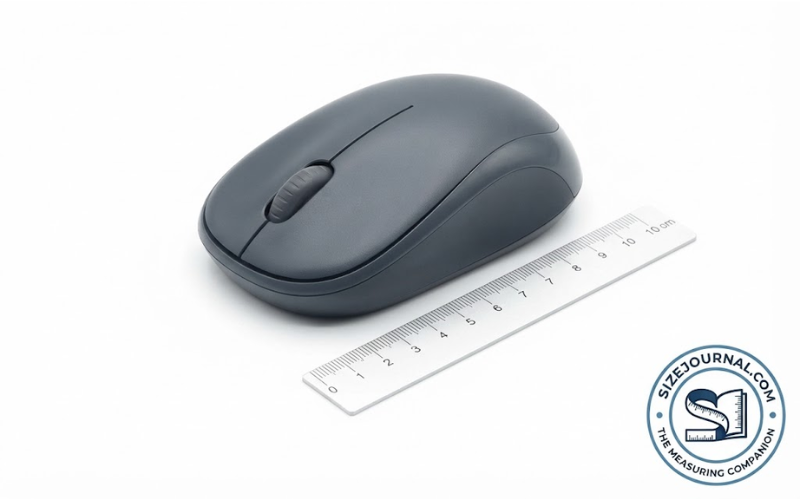
Computer peripherals come in various ergonomics and styles, but travel-sized or compact wireless mice are intentionally engineered for portability. Most standard pocket-friendly or travel wireless mice measure right around 10 centimeters in length from the tip of the primary click buttons to the rear curve of the housing.
This specific dimension allows the mouse to support the arch of a user’s fingers while remaining small enough to slide into a laptop sleeve or external pouch without creating an awkward bulge. Because millions of people handle computer mice daily, using a mouse as a mental reference point makes estimating 10 centimeters completely intuitive.
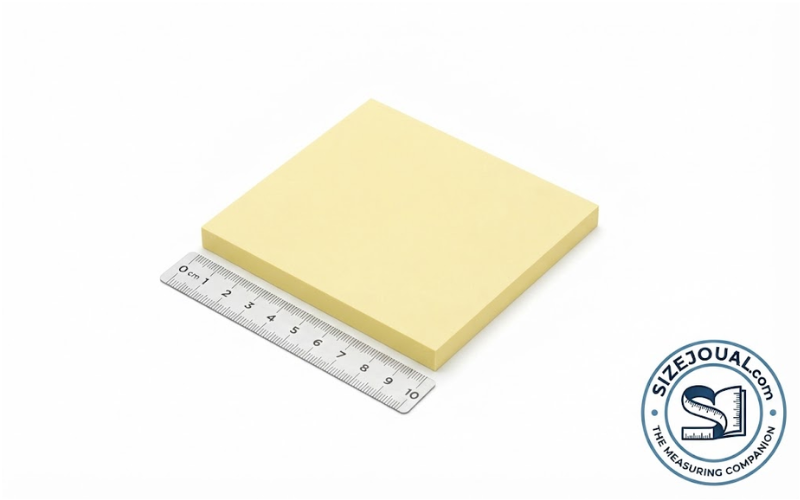
3. A Standard Square Post-it Note Width 📝
Sticky notes are staple stationery items found on nearly every office desk and kitchen counter. While sticky notes come in various rectangular and square dimensions, the classic, original square Post-it note measures 3 by 3 inches, or approximately 7.6 by 7.6 centimeters. However, larger square variants, such as the popular 4 by 4-inch pads, actually measure approximately 10.16 centimeters on each side.
This extra-large square sticky note provides an almost exact match to a 10-centimeter square layout. Drafting notes, sketching quick UI wireframes, or creating mini charts on these pads relies directly on this familiar spatial footprint.
4. A Small Succulent Plant Pot Diameter 🪴
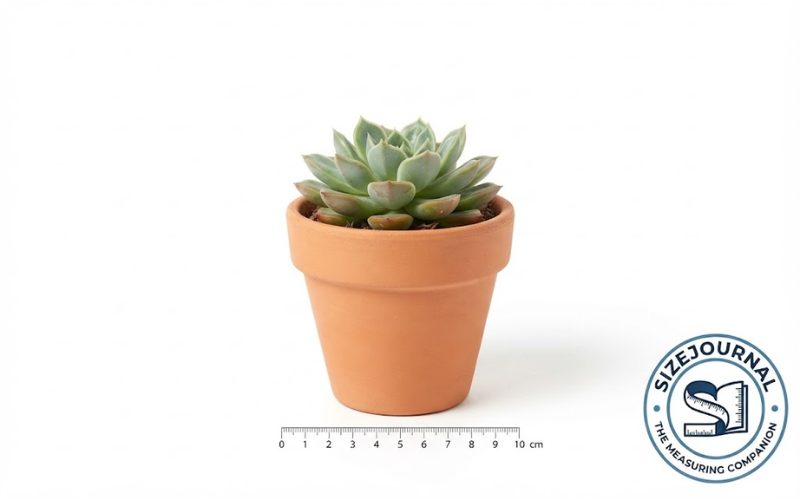
Indoor gardening has surged in popularity, bringing small potted plants into living rooms, office cubicles, and kitchen windowsills. If you visit a plant nursery or home goods store, the most common starter size for mini succulents, cacti, and propagation cuttings features a pot with a top rim diameter of 10 centimeters.
This specific diameter gives the root system adequate breathing room and soil volume during the early stages of growth, while keeping the overall footprint small enough to arrange multiple pots on a narrow shelf. Measuring the top opening of a standard nursery pot gives you an instant, living visualization of a 10-centimeter span.
5. A Hard Eyeglasses Case Width 👓
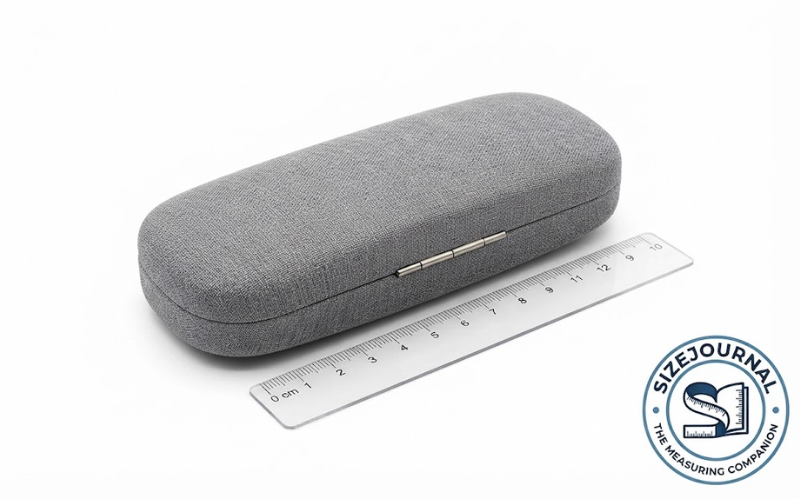
Protecting expensive prescription eyewear or sunglasses requires a durable shell. Standard hard-shell eyeglasses cases are manufactured to accommodate adult frames while maintaining an ergonomic shape that slips easily into purses or briefcases.
While the length of a glasses case is usually longer, many compact folding cases or specific semi-rigid cases feature a width or cross-section measuring close to 10 centimeters. Holding a standard glasses case provides a solid tactile sense of firmness and width, anchoring the concept of 10 centimeters to an object designed to protect fragile daily essentials.
6. A Standard Pocket Calculator Width 🧮
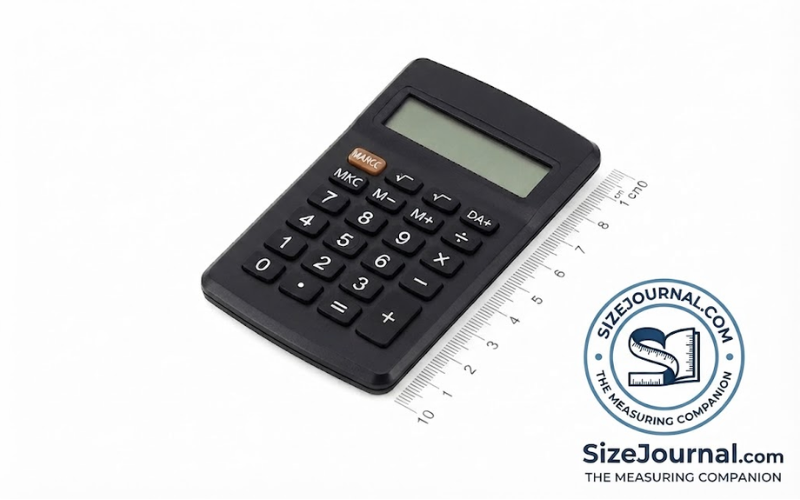
While smartphones have largely replaced standalone calculators for complex math, compact pocket calculators remain popular among accountants, students, and retail cashiers who prefer physical buttons. A standard handheld pocket calculator is typically designed with portability in mind, featuring a width of approximately 10 centimeters.
This width leaves enough horizontal space to comfortably fit a grid of numbers, function keys, and a basic single-line or dual-line liquid crystal display, all while remaining easy to grip with one hand. Visualizing the layout of a classic pocket calculator bridges the gap between abstract numbers and physical scale.
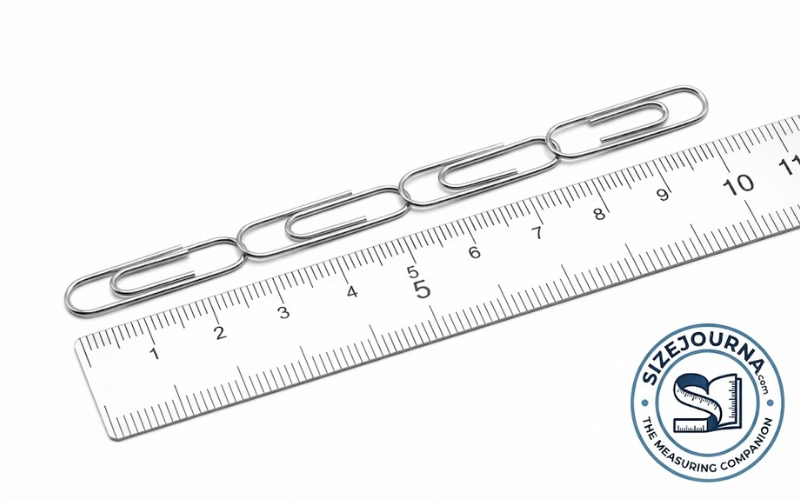
7. Four Standard Paperclips End-to-End 📎
Office supplies provide some of the most accessible measuring tools for everyday situations. A standard office paperclip (often referred to as a number-one size clip) measures approximately 2.5 centimeters or 25 millimeters in length from loop to loop.
Lining up four of these standard paperclips in a straight chain end-to-end yields a total span of exactly 10 centimeters. Teachers frequently use this visual demonstration in classrooms to help students understand how smaller units multiply into larger metric measurements without needing heavy equipment.
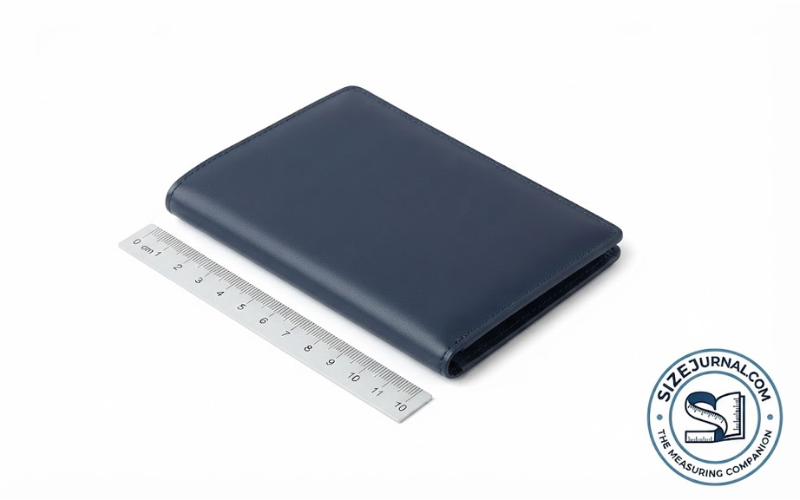
8. A Minimalist Passport Holder Width ✈️
International travel requires keeping critical identification documents secure and organized. Minimalist passport holders and travel wallets are specifically tailored to fit the official dimensions of a standard international passport booklet, which is historically around 12.5 by 8.8 centimeters.
To accommodate the passport snugly without excess fabric or leather shifting around, many slim passport holder sleeves measure right around 10 centimeters in width. Handling a passport wallet during airport security checks or packing preparation offers a practical mental anchor for this exact measurement.
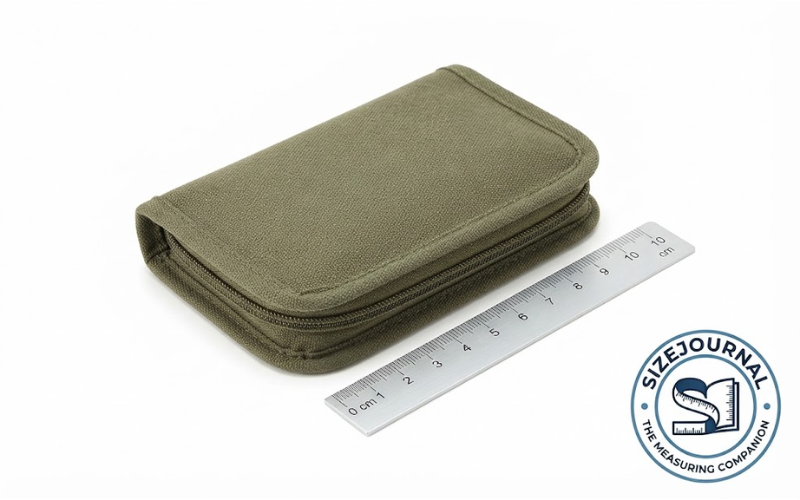
9. A Travel Sewing Kit Storage Case 🧵
Portable emergency sewing kits are compact lifesavers packed into tiny storage containers designed to slip into luggage, glove compartments, or hotel room drawers. These mini cases generally house spools of thread, tiny scissors, safety pins, and needles, and they typically measure around 10 centimeters along their longest dimension.
The manufacturers design these kits to be as small as possible while still holding functional tools, making 10 centimeters the ideal structural threshold for pocket-sized emergency utility kits.
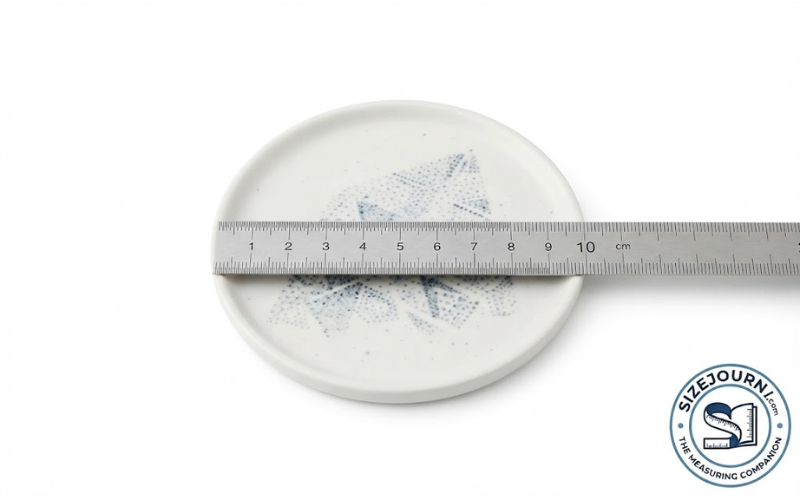
10. A Round Ceramic Coffee Coaster Diameter ☕
Protecting wooden tabletops from condensation rings makes drink coasters a ubiquitous household accessory. Standard round ceramic, cork, or stone coffee coasters are manufactured with a uniform diameter of 10 centimeters.
This specific dimension easily accommodates the base of standard coffee mugs, water glasses, and wine goblets while maintaining a balanced visual proportion on a coffee table or dining set. Every time you lift your mug off a coaster, you interact with a physical 10-centimeter circle.
BioWiki: 10 Centimeters Measurement Profile
| Attribute | Detail |
| Primary Metric Unit | 10 Centimeters (10 cm) |
| Millimeter Equivalent | 100 Millimeters (100 mm) |
| Meter Equivalent | 0.1 Meters (0.1 m) |
| Imperial Equivalent | ~3.94 Inches |
| Common Scale Category | Small-scale handheld objects |
| Typical Household Reference | Four US quarters aligned, compact mouse width, coffee coaster diameter |
| Primary Application Fields | Stationery, electronics design, crafting, packaging, education |
Related Posts
- 10 Common Things That Are 2 cm Big
- 10 Common Things That Are 1 cm Big
- 10 Common Things That Are 8 cm Big
Frequently Asked Questions About Measurements and 10 Centimeters
How many inches is 10 cm?
Ten centimeters is equal to approximately 3.94 inches. Because one inch equals 2.54 centimeters, dividing 10 by 2.54 yields this exact imperial decimal value. For most practical, non-scientific estimates, rounding up to nearly 4 inches works well.
How many millimeters are in 10 cm?
There are 100 millimeters in 10 centimeters. The metric system increases or decreases by factors of ten, meaning every single centimeter contains ten individual millimeters.
Is a credit card 10 cm long?
No, a standard credit card or debit card is slightly smaller than 10 centimeters. According to global ISO/IEC 7810 standards, a standard bank card measures 8.56 centimeters (85.6 mm) in length and 5.39 centimeters in width.
Why is the metric system based on centimeters?
The metric system is built around powers of ten to ensure seamless mathematical conversions between different scales. Centimeters represent a subdivision of the meter, which was historically derived as a fraction of the Earth’s meridian, making calculations intuitive across science, engineering, and daily life.
How can I measure 10 cm without a ruler?
You can estimate 10 centimeters by lining up four standard US quarters side-by-side, placing four standard office paperclips end-to-end, or using the width of a compact computer mouse. These common items provide reliable approximations when a physical tape measure or ruler is unavailable.
Conclusion
Getting a firm grasp of measurements like how big is 10 cm transforms abstract numbers into physical reality. Whether you are crafting, shopping, or organizing your workspace, keeping these familiar items in mind ensures you always have a reliable mental gauge ready to use.
FOR MORE MEASUREMENTS VISIT: SIZE JOURNAL
1 thought on “10 Common Objects That Are 10 Cm Big”