Ever found yourself in the middle of a quick DIY task, hanging a picture frame, or measuring a piece of fabric, only to realize your tape measure is nowhere to be found? It happens all the time. Fortunately, the world around us is packed with standardized objects that double as remarkably accurate measuring tools.
An inch equals exactly 2.54 centimeters or 25.4 millimeters. Knowing which household items measure precisely one inch gives you a mental ruler you can use anytime, anywhere.
Whether you need to gauge drill depth, check plant planting spacing in the garden, or estimate seam allowances for sewing, these ten common everyday items will help you measure one inch with total confidence. 🛠️
One inch equals exactly 25.4 mm. Source: snik2016 / Getty Images
Quick Reference: The 1-Inch Cheat Sheet ⚡
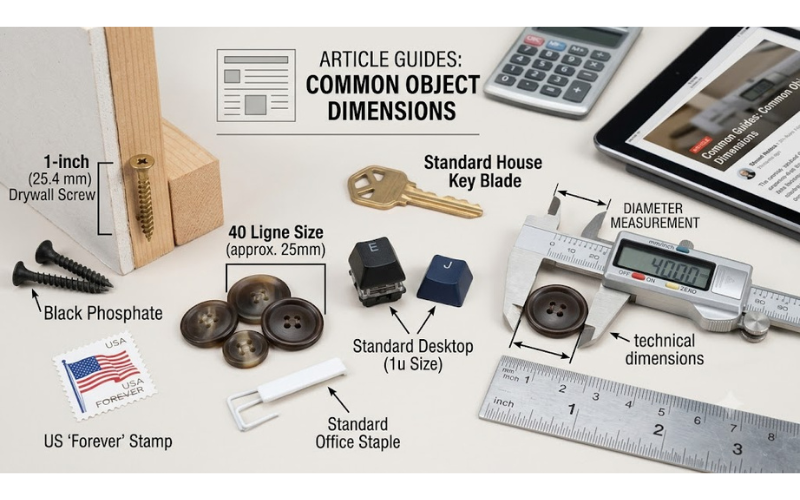
Need a measurement right now? Here is a fast visual cheat sheet of everyday objects that equal 1 inch (or 2.54 cm):
- 📎 Standard Paperclip (No. 1 Size): Length is exactly 1 inch from top bend to bottom loop.
- 🪙 U.S. Quarter Coin: Diameter is 0.955 inches—less than 1 millimeter shy of a full inch.
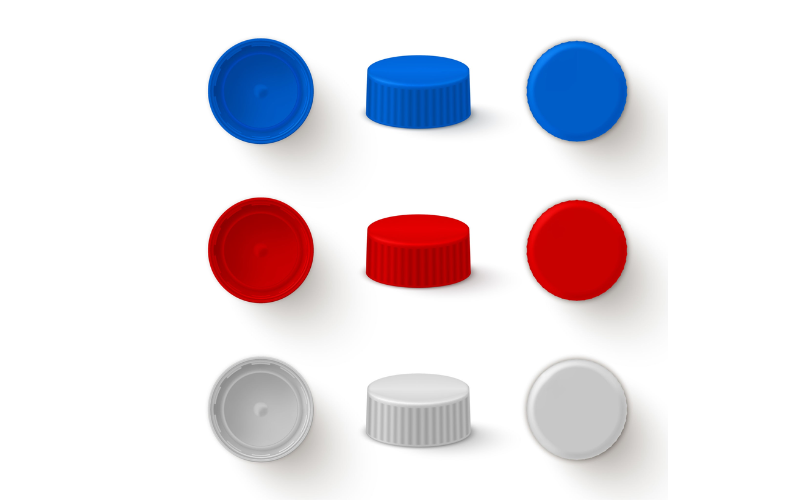
- 🍾 Plastic Bottle Cap: Outer top diameter across the widest part is roughly 1 inch.
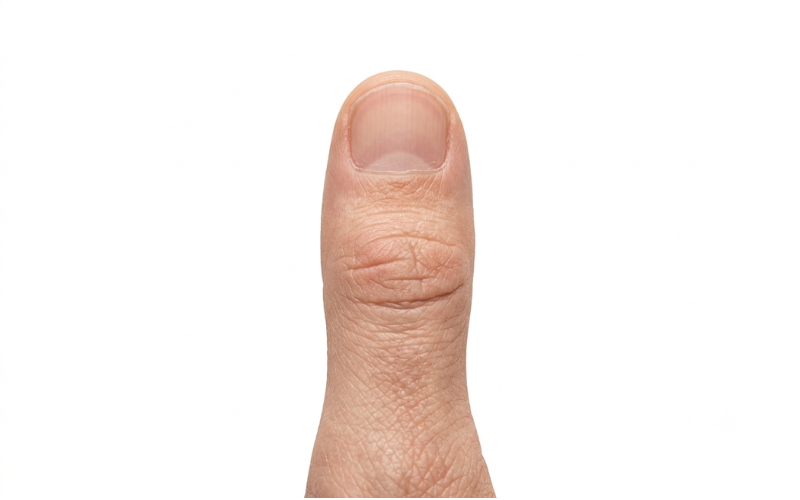
- 👍 Adult Thumb Joint: Distance from the top knuckle fold to the tip of your thumb.
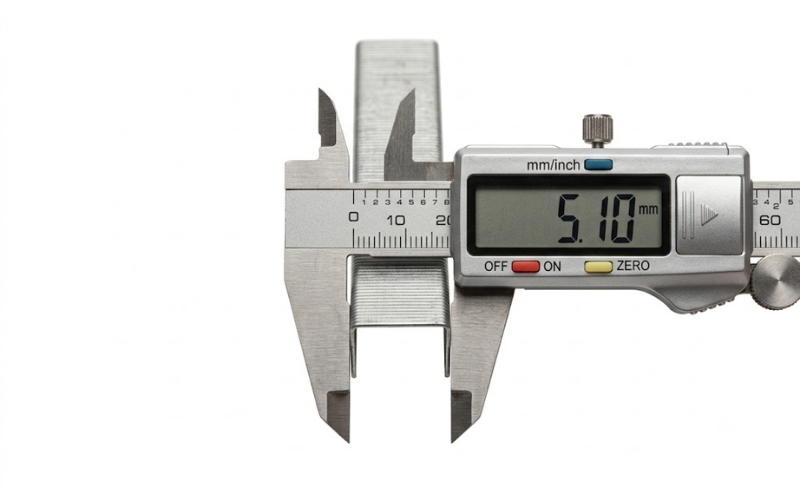
- 📌 Standard Office Staple: Total wire length prior to bending measures 1 inch.
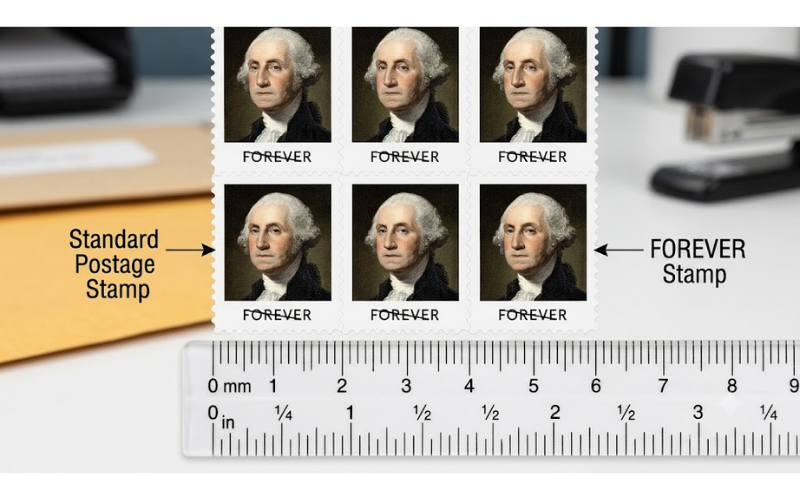
- ✉️ Standard Postage Stamp: Height of a typical square or rectangular commemorative stamp.
- 🎲 Standard Playing Die: Most six-sided game dice measure 0.6 to 1 inch along each edge.
- 🗝️ Standard House Key Blade: Length of the cut metal portion that slides into the lock.
- 🔩 1-Inch Drywall Screw: Threaded shaft length from under the flat head to the tip.
- ⌨️ Keyboard Keycap: Top face width of a standard desktop computer keyboard key.
BioWiki: 1-Inch Household Benchmarks 📊
For quick comparisons, here is a detailed breakdown of each object’s exact measurement, standard variance, and ideal real-world use case.
| Object | Measurement Type | Exact Dimension | Metric Equivalent | Best Real-World Use Case |
| Standard Paperclip (No. 1) | Full Length | 1.00 in | 25.4 mm | Measuring small gaps & seam allowances 🧵 |
| U.S. Quarter Coin | Outer Diameter | 0.955 in | 24.26 mm | Quick coin-check for tire tread & hardware 🚗 |
| Plastic Water Bottle Cap | Top Outer Diameter | 1.00 – 1.10 in | 25.4 – 28 mm | Tracing small circles & soil plant spacing 🌿 |
| Adult Thumb Top Joint | Knuckle to Tip | ~1.00 in | ~25.4 mm | On-the-go body measurement tool 🖐️ |
| Standard Staple (26/6) | Unbent Wire Width | 1.00 in | 25.4 mm | Precision paper-gap checking 📑 |
| Postage Stamp (Standard) | Height | 1.00 in | 25.4 mm | Checking mail envelope dimensions ✉️ |
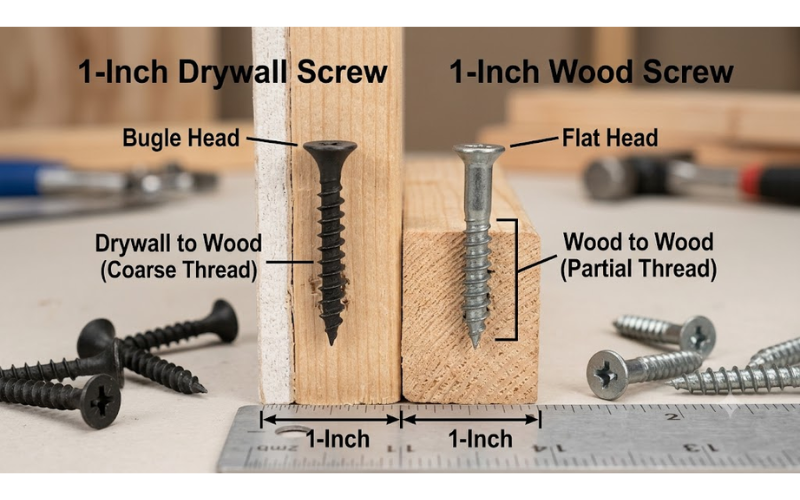
| Standard Drywall Screw | Thread Length | 1.00 in | 25.4 mm | Wall hanging depth & woodworking 🔨 |
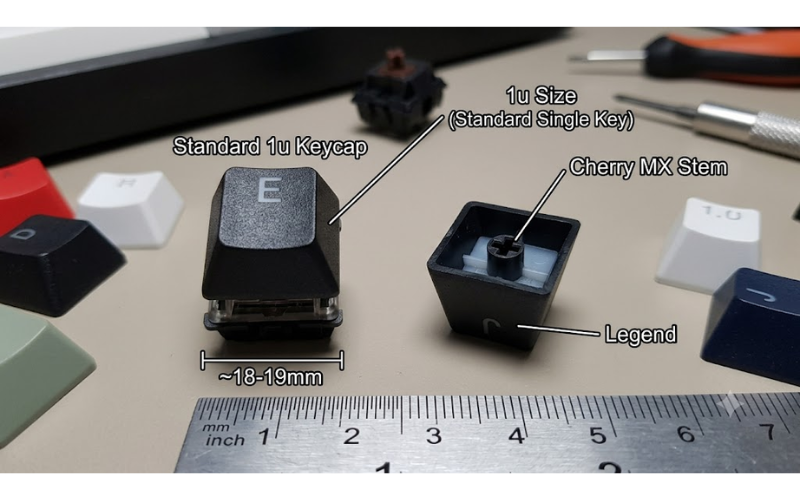
| Desktop Keycap (1u Size) | Base Width | 0.75 – 1.00 in | 19 – 25.4 mm | Quick spacing check on flat surfaces 💻 |
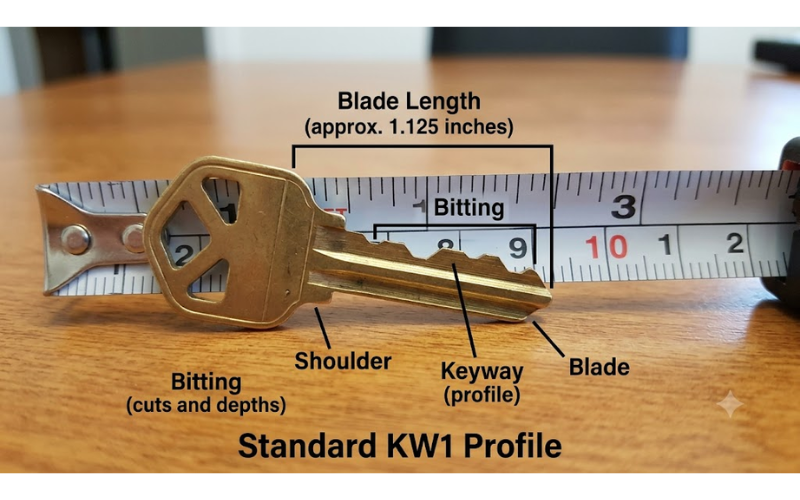
| Standard House Key Blade | Cut Metal Section | 1.00 – 1.10 in | 25.4 – 28 mm | Checking small slot depths 🔑 |
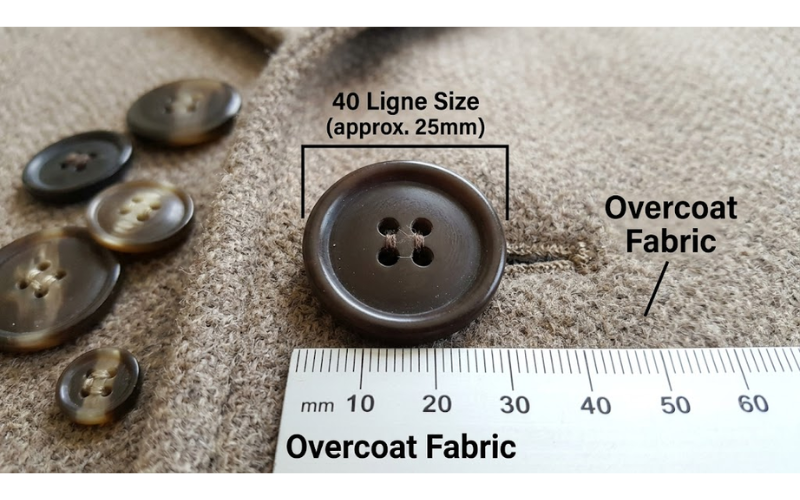
| Large Sewing Button | Outer Diameter | 1.00 in (40 Ligne) | 25.4 mm | Crafting, buttonhole sizing & tailoring 🪡 |
The 10 Common Everyday Things That Are 1 Inch Long 🔍
Let’s break down each of these items in detail so you know how to use them as reliable measuring tools when you’re in a pinch.
1. Standard Paperclip (No. 1 Size) 📎
The humble metal paperclip is one of the most reliable measuring tools hiding in plain sight. Standard office paperclips come in two primary sizes: Small (No. 1) and Jumbo.
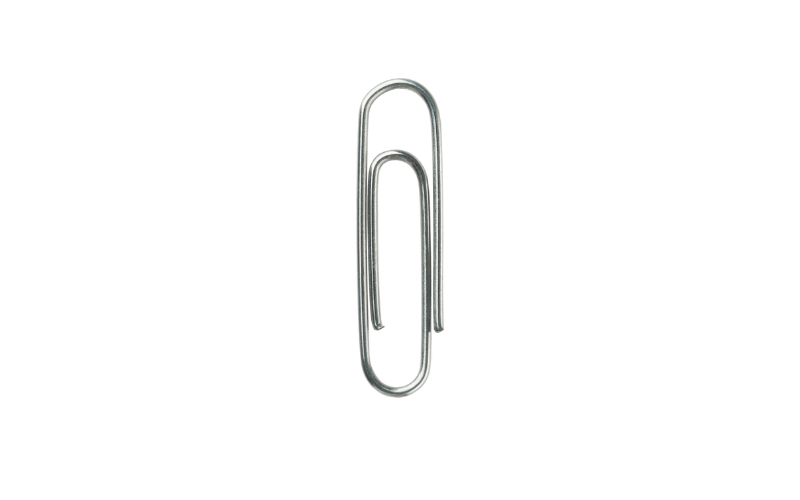
The standard No. 1 paperclip measures exactly 1 inch (25.4 mm) in length from the very top curve to the bottom loop edge.
Standard No. 1 paperclip measuring 1 inch long. Source: kasia2003 / Getty Images
- Why it works so well: Office supply manufacturing standards are remarkably strict. A box of standard Gem-style paperclips will have virtually zero variance in length from clip to clip.
- Practical hack: Keep a single paperclip in your wallet or pencil pouch. If you need to measure 2 or 3 inches, lay paperclips end-to-end in a straight line.
- Bonus tip: Unfolding a standard paperclip gives you a straight wire that is roughly 4 inches long, making it useful for measuring slightly longer items too!
2. U.S. Quarter Coin 🪙
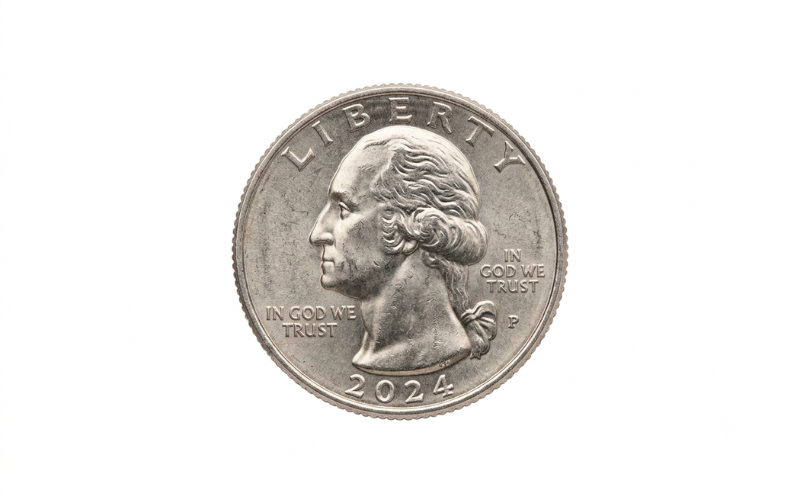
If you carry pocket change, you carry an almost perfect 1-inch ruler. The United States quarter dollar coin has an official diameter of 0.955 inches (24.26 mm).
While technically 0.045 inches short of a full inch, that microscopic difference (less than 1.2 millimeters) is completely negligible for almost every home project, craft, or quick visual measurement.
- The Math: Laying 10 quarters end-to-end gives you 9.55 inches—a handy trick when estimating larger distances on desk surfaces or furniture.
- Tire Tread Check: Drivers often use coins to check tire tread depth. While a penny is traditional, a quarter can tell you if your tires have reached 4/32 inches of tread depth (measure from Washington’s head to the top edge).
- International equivalents: If you are in Canada, the Canadian quarter is virtually identical at 0.94 inches (23.88 mm). In Europe, the 2 Euro coin measures 1.01 inches (25.75 mm), which is even closer to a true inch!
3. Plastic Water & Soda Bottle Caps 🍾
Take a look at the plastic screw-off cap on your water bottle or soda bottle. Modern beverage manufacturers use highly standardized packaging machinery to keep caps leak-proof across millions of units.
The top diameter of a standard 28mm beverage cap measures right around 1 inch to 1.1 inches across the widest outer edge.
Standard plastic bottle caps measure roughly 1 inch. Source: Aleksandr Kharitonov / Getty Images
- Why it’s useful: Bottle caps are everywhere—in your car cup holder, on your desk, and in the kitchen.
- Gardening Hack: When planting seeds that require 1-inch spacing or 1-inch planting depth, press the flat side of a bottle cap into the soil to mark your depth line.
- Kid-Friendly Crafting: Bottle caps make simple 1-inch stencil wheels for kids’ art projects or leatherworking pattern outlines.
4. The Top Joint of an Adult Thumb 👍
Long before standardized steel tapes existed, humans measured the world using their own bodies. In fact, historical definitions of the inch were directly tied to the width or length of a man’s thumb!
For most adults, the distance from the first knuckle crease to the tip of the thumb is approximately 1 inch.
[ Thumb Tip ] <———- 1 Inch (2.54 cm) ———-> [ First Knuckle Crease ]
- Personal Calibration: Because human hands vary, take two minutes today to test your thumb against a ruler. Find out if your 1-inch landmark sits right at the crease, slightly above it, or right at the fingernail bed.
- The “Rule of Thumb”: This old idiom literally originates from using the thumb as a quick measurement gauge for woodworking, tailors, and builders.
- When to use it: Perfect for quick gardening depth checks, measuring fabric hems while sewing, or estimating small hardware gaps on the fly.
5. Standard Office Staple (Unbent Width) 📌
When you look at a staple holding papers together, you see the top bar (the crown). But before a staple is pressed into paper by a stapler, it starts as a flat wire strip.
The most common office staple worldwide is the 26/6 standard staple. The total length of wire used to form a single staple—including the crown and both legs before bending—is exactly 1 inch (25.4 mm).
- Crown Width vs. Total Wire: The top crown width of a standard staple is about 0.5 inches (12.7 mm), while each leg is 0.25 inches (6.35 mm) long.
- Adding them up: 0.5 in (crown)+0.25 in (left leg)+0.25 in (right leg)=1.0 inch total wire.
- Hardware precision: Because staple manufacturing demands tight tolerances to prevent stapler jams, staple dimensions are maintained to fractions of a millimeter.
6. Standard Postage Stamps ✉️
While mail formats have modernized over time, traditional definitive and commemorative postage stamps have held onto classic dimensions for decades.
A standard rectangular or square commemorative postage stamp printed by the U.S. Postal Service (and many international postal systems) measures 1 inch tall by 0.85 to 1 inch wide.
- Vintage Precision: Philatelists (stamp collectors) know that stamp perforations follow precise grids. A standard sheet layout often uses 1-inch grid increments.
- Quick Surface Scale: If you need to estimate small dimensions on an envelope, package, or document, a stamp provides a quick visual anchor right on the paper.
7. 1-Inch Drywall & Wood Screws 🔩
If you hang shelves, assemble furniture, or work on home improvement projects, you likely have a box of fasteners sitting in your garage or toolbox.
A 1-inch drywall screw or wood screw has a threaded body measuring precisely 1 inch from directly under the flat head down to the sharp tip.
- How fasteners are measured: For flat-head countersunk screws, the entire length including the head equals 1 inch. For round-head or pan-head screws, the 1-inch measurement applies strictly to the shaft beneath the head.
- Why depth matters: When anchoring items into 1/2-inch or 5/8-inch drywall, knowing your screw length prevents you from puncturing deep pipes or electrical conduits running behind studs.
8. Standard Desktop Keycap (1u Size) ⌨️
Look down at your computer keyboard. The letter keys (A, S, D, F), number keys, and function keys are built using a standard unit of size known in the mechanical keyboard industry as 1u (1 Unit).
A standard 1u keycap has a outer base profile measuring approximately 0.75 to 1 inch (19 mm to 25.4 mm) depending on the keycap profile (such as OEM, Cherry, or SA profiles).
- Spacing Standard: Keyboards follow a strict 19.05 mm (0.75 in) center-to-center switch spacing grid, with the keycap edges extending outwards to roughly 1 inch across full key housings.
- Everyday Convenience: Since many of us sit in front of a keyboard for hours every day, keycaps provide a ready-at-hand reference point without ever leaving your desk!
9. A Standard House Key Blade 🗝️
Take out your house key or padlock key. Keys consist of two main parts: the wide top bow (where you grip it) and the long metal blade (where the teeth are cut).
On standard residential door keys (such as Schlage SC1 or Kwikset KW1 blanks), the cut metal blade section measures almost exactly 1 inch to 1.1 inches long.
- Why accuracy matters here: Lock pin spacing relies on sub-millimeter tolerances. The distance between key cuts is measured in tiny increments across that 1-inch blade length.
- Measurement tip: Use the blade of your key to gauge slot depths, wall plug depths, or small gap clearances.
10. Large Coat Button (40 Ligne Size) 🪡
Button sizes are traditionally measured using an ancient unit called a Ligne (1 Ligne = 1/40th of an inch).
A standard large coat button, blazer button, or crafting button rated at 40 Ligne (40L) measures exactly 1 inch (25.4 mm) in diameter.
- Tailoring standard: Tailors and fashion designers use 40L buttons as a benchmark for heavy outerwear, suit jackets, and decorative craft fastenings.
- Crafting Hack: If you are sewing buttonholes or placing decorative studs on fabric, holding a 1-inch coat button against your fabric gives you an instant physical guide.
Smart Hacks for Measuring Without a Ruler 🧙♂️
Now that you know these ten 1-inch items, here are three quick tricks to keep your mental measurements accurate in any situation:
1. The Stacking Method 🧱
Need to measure 3 inches or 5 inches? Stack or align multiple 1-inch objects in a straight row.
- 3 Paperclips end-to-end = 3 Inches
- 4 Bottle Caps side-by-side = ~4 Inches
- 5 Quarters lined up edge-to-edge = ~4.77 Inches (close enough for rough estimates!)
2. The Bill Folding Trick 💵
A U.S. dollar bill is exactly 6.14 inches long and 2.61 inches wide.
- If you fold a dollar bill in half lengthwise three times, you get narrow segments that are roughly 0.76 to 1 inch wide.
- The width of a dollar bill (2.61 in) minus a quarter’s diameter (0.955 in) gives you a quick way to cross-check short dimensions on paper!
3. The Body Measurement Rule 🖐️
Take a moment to measure your hands once with a tape measure and memorize your personal dimensions:
- Width of your index finger at the knuckle: Usually around 0.75 to 1 inch.
- Length of your index finger: Typically 2.5 to 3 inches.
- Full span of your open hand (thumb to pinky): Typically 7 to 9 inches.
Frequently Asked Questions (FAQs) ❓
What metric length is equal to 1 inch?
One inch is defined internationally as exactly 2.54 centimeters or 25.4 millimeters.
Is a U.S. quarter exactly 1 inch wide?
Not quite, but it’s extremely close! A U.S. quarter has a diameter of 0.955 inches (24.26 mm), which is less than 1.2 mm short of 1 inch. For informal household estimates, it works brilliantly.
Which coin is closest to exactly 1 inch?
The 2 Euro coin measures 1.01 inches (25.75 mm) in diameter, making it one of the closest modern circulating coins to a true inch. The British £1 coin measures 0.92 inches (23.43 mm), while the Australian $1 coin is 0.98 inches (25.0 mm).
How can I measure 1 inch on my smartphone screen?
Be careful! Screen sizes and pixel densities vary widely across devices. A digital image of a ruler displayed on a phone screen is rarely 100% true to scale unless you use a dedicated ruler app calibrated specifically to your device’s screen dimensions.
How many mm are in an inch?
There are exactly 25.4 millimeters in one imperial inch.
Conclusion 🎯
You don’t always need a tape measure in hand to get an accurate sense of scale. The world around us is built on standardized measurements, and once you recognize them, finding a 1-inch reference becomes second nature.
Whether you reach for a No. 1 paperclip, a U.S. quarter, a plastic bottle cap, or simply rely on the top joint of your thumb, you have instant access to a reliable measuring tool wherever you go.
Next time you are hanging picture hooks, spacing seeds in your garden, or tackling a quick home improvement project, grab one of these everyday items and measure away with confidence! 📏✨
FOR MORE MEASUREMENTS VISIT: SIZE JOURNAL
1 thought on “10 Common Everyday Things That Are 1 Inch Long 📏✨”